
Bitumen Driveways
Spray-seal and two-coat bitumen driveways for homes, farms and long rural access roads across the Hunter Valley — a cost-effective, hard-wearing alternative to hot-mix asphalt.
Learn More →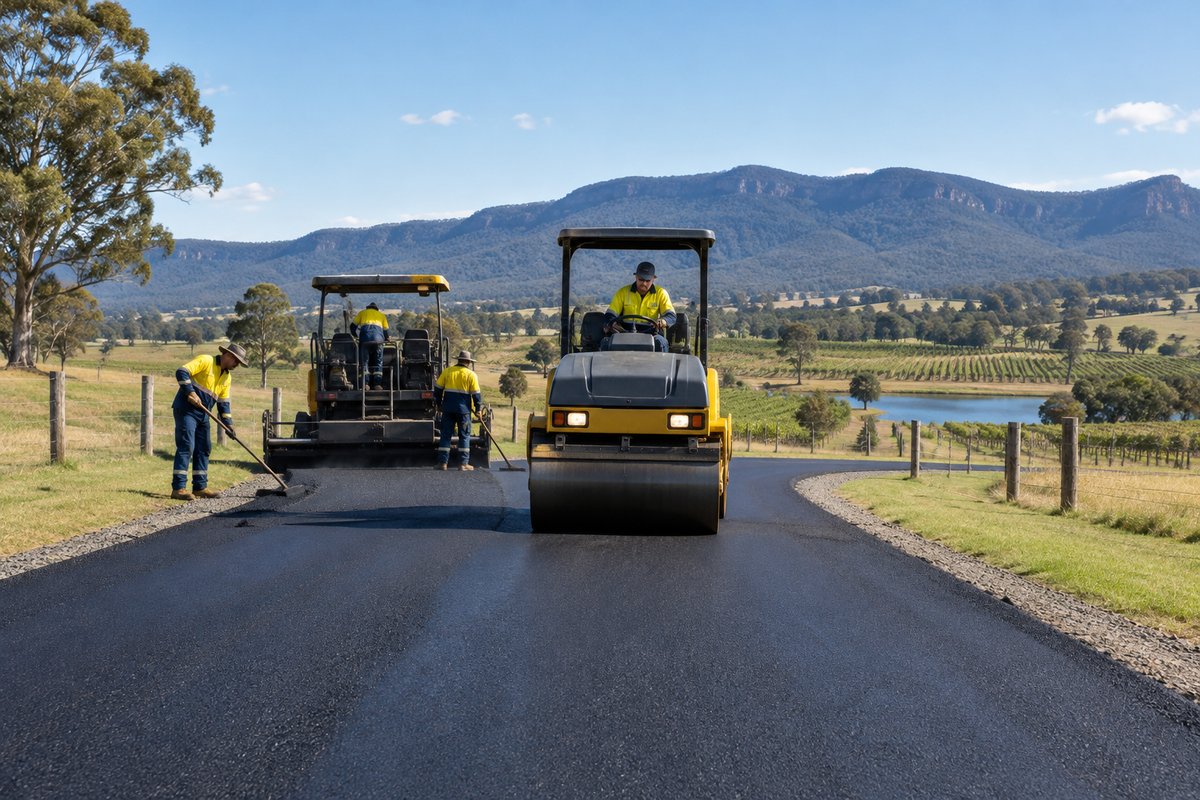
Long driveways and access tracks for acreage, farms, vineyards and lifestyle blocks — base preparation, drainage and a sealed asphalt or bitumen finish.
Request a Free Quote
If you're on acreage, you know the drill. Every summer storm cuts fresh gutters down the gravel. Every dry spell throws dust over the house, the cars and the washing. We build sealed rural driveways and farm access roads that stop that cycle. We start with a proper pavement: boxing out soft ground, laying and compacting crushed rock road base, and shaping the surface with crossfall so water runs off instead of down the wheel tracks.
Ground conditions across the Hunter Valley change a lot from one property to the next. Reactive clays swell when wet and crack open in the heat. Low-lying blocks near the river flats stay soggy for weeks after rain, and western properties bake hard through summer. That's why we look at your soil and drainage before we talk about surface finishes. Where the subgrade is soft, we may lay geotextile fabric under the base. We also build table drains, spoon drains or culvert crossings where water needs somewhere to go.
Once the base is right, we match the seal to how you use the driveway. Long runs past paddocks or vines often suit a two-coat spray seal, which we cover in detail on our bitumen driveways page. Hot mix asphalt works well for the turning circle near the house or sheds, where tight turns from utes, horse floats and trucks scuff a chip seal. Got an older sealed driveway that's breaking up instead? Our asphalt resurfacing and repairs service may get more life out of it before a full rebuild.
From soil checks and road base to drainage and the final seal
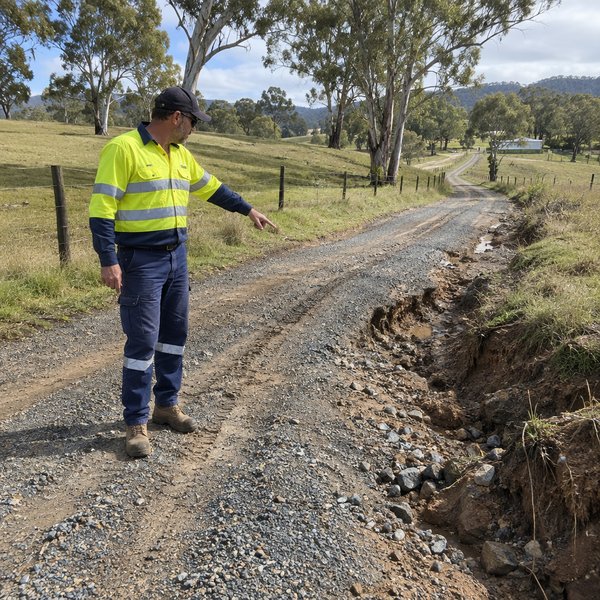
We walk the full length of the driveway with you and note soft spots, washouts, low points and where water crosses during storms. We check the soil type and ask what vehicles use the road, from the family car to the delivery semi. This shapes the pavement depth, the drainage design and which seal suits each section.
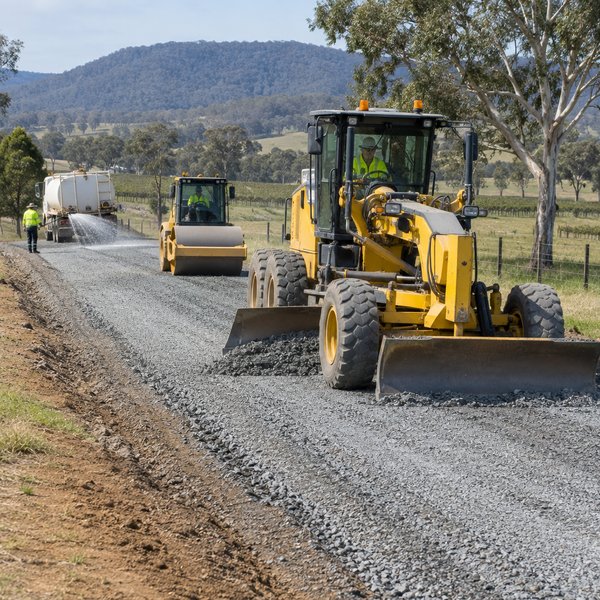
A grader or excavator removes loose gravel and soft material until we reach firm ground. Where the clay is weak, we lay geotextile fabric first. Then we spread crushed rock road base in layers, wetting each one from a water cart and compacting it with a roller.
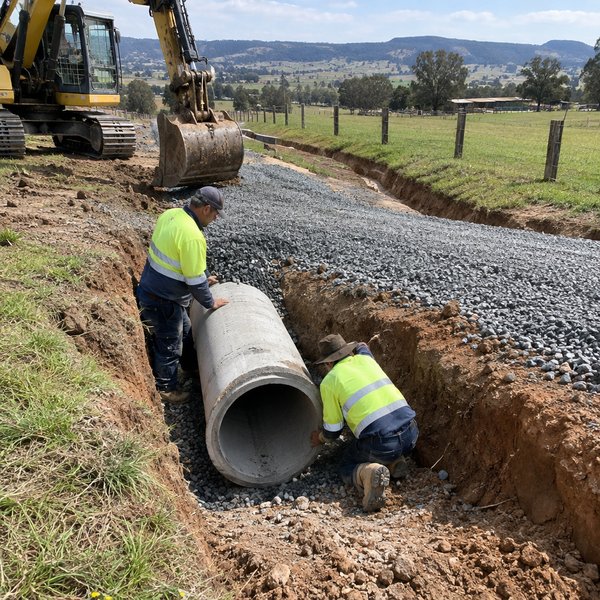
We trim the base to a crowned or one-way crossfall so rain sheds to the edges. Table drains and spoon drains carry water along the road. Culvert pipes take it underneath at gullies, keeping it from pooling on the pavement or undercutting the edges.
For spray seal sections, a sprayer truck applies hot bitumen and a spreader drops aggregate chip, which is rolled in, usually as two coats. For asphalt areas, we apply a tack or prime coat, lay hot mix through a paver, then roll it to compaction. We finish the edges cleanly where the seal meets gateways, cattle grids and sheds.
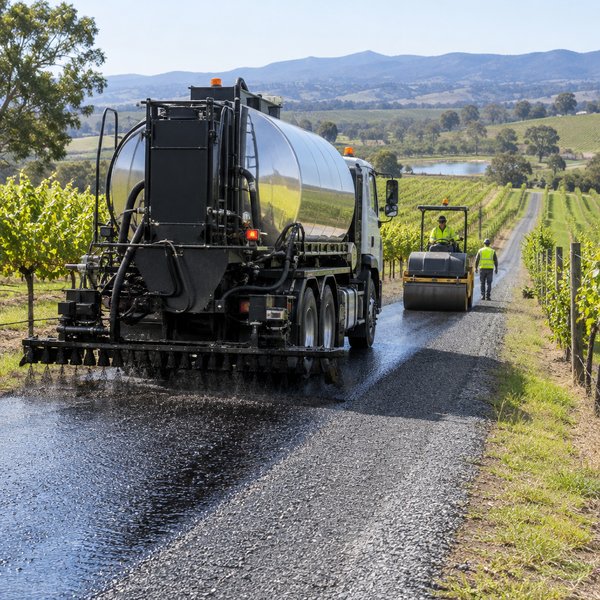
Fewer washouts, less dust and easier access for every vehicle
A compacted base with proper crossfall and drains moves stormwater off the driveway before it can cut channels. You stop spending weekends raking gravel back into ruts or ordering more loads of blue metal. The road stays passable when the creek's up and the paddocks are soaked.
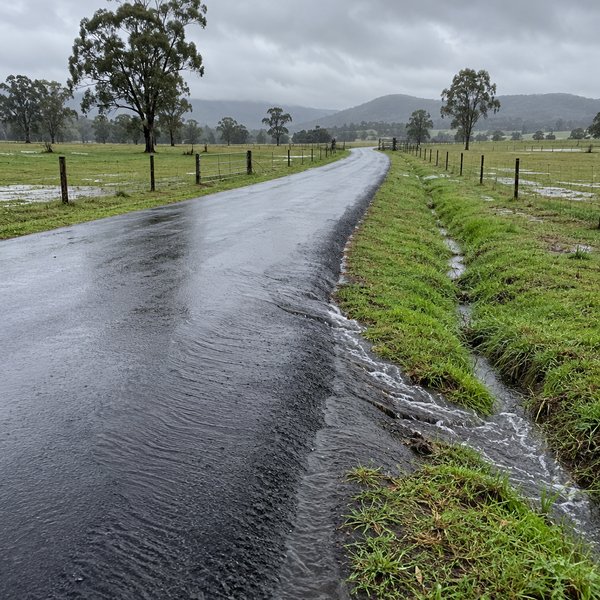
Gravel driveways throw dust every time a vehicle passes, especially through a dry Hunter summer. A sealed surface cuts that right back. You'll notice it on the verandah, inside the house and on roofs that feed your rainwater tanks.
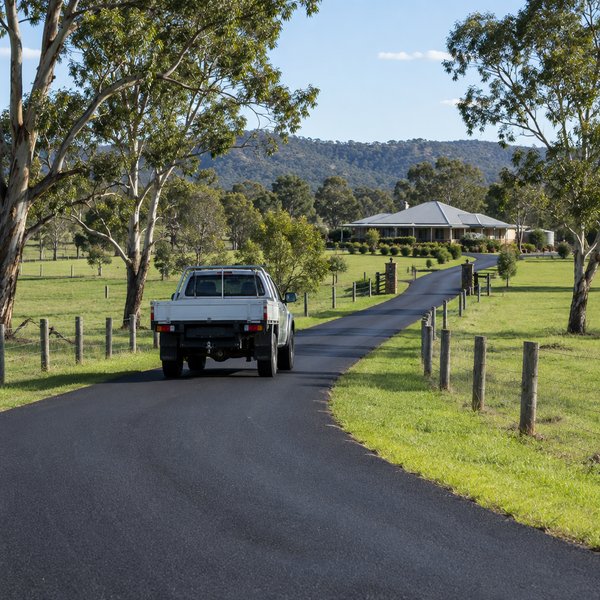
A properly built pavement carries feed trucks, horse floats, removalists and tradies without rutting or breaking up. Guests at cellar doors and farm stays arrive without bouncing through potholes. A clean sealed entrance also tells buyers the property has been looked after.
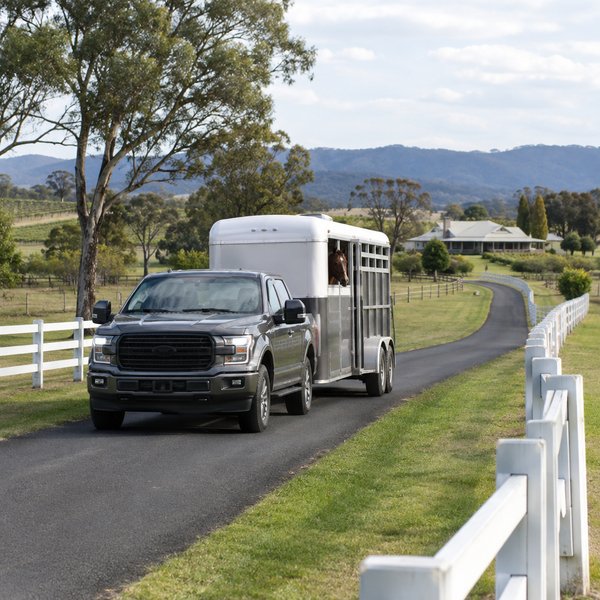
We know how reactive clays, river flat silts and hard western ground behave under a driveway. Our pavement depth and base treatment are chosen for the ground you actually have. That's what stops cracking and soft spots appearing after the first big wet.
Most failed country driveways fail because of water, not traffic. We design crossfall, table drains, spoon drains and culverts as part of the build. We don't treat them as an extra you only find out about later.
We lay both two-coat bitumen seals and hot mix asphalt, so we recommend what suits each section of your driveway. You get one crew and one plan from the front gate to the shed. We can also handle sealed car parks and line marking for wineries and venues.
We're used to stock, vines, gates, cattle grids and deliveries that can't stop for a week. We talk through access and staging with you before machinery arrives. That way the property keeps running while we work.
Common questions answered
Sometimes, but only if the existing gravel sits on a solid, well-drained base. Most rural driveways in the Hunter have lost their fines, rutted, or sit straight on clay, so we usually need to rebuild or top up the road base first. Sealing over a weak base just locks the problems in, and the seal cracks and potholes soon after.
A two-coat spray seal is the common choice for long runs because it covers large areas economically and handles rural traffic well. Asphalt holds up better where vehicles turn tightly, like turning circles, shed aprons and the area near the house. Many of our acreage jobs use both, with spray seal on the run and asphalt where it gets scuffed.
The biggest factors are length and width, how much road base work is needed, and the soil underneath. Drainage adds to the scope if we need culverts, table drains or extra shaping. Access for trucks and machinery, plus the choice between spray seal and asphalt, also matter, so we quote after inspecting the site.
Bitumen needs a dry base and reasonable temperatures to bond properly, so heavy rain or a cold snap can push a seal back. Clay subgrades also need time to dry out after a wet spell before we can compact over them. We plan around the forecast and let you know early if conditions mean we need to move a date.
Keep the table drains and culverts clear of grass, silt and debris so water keeps moving off the road. Patch small cracks or edge breaks early before water gets into the base. Spray seals also benefit from a reseal down the track as the bitumen ages in the sun, and we can inspect and advise when that's due.
We provide Acreage & Rural Driveways throughout the Hunter Valley, NSW and surrounding suburbs.
Don't see your area? Contact us to check if we service your location!
View All Areas