
Bitumen Driveways
Spray-seal and two-coat bitumen driveways for homes, farms and long rural access roads across the Hunter Valley — a cost-effective, hard-wearing alternative to hot-mix asphalt.
Learn More →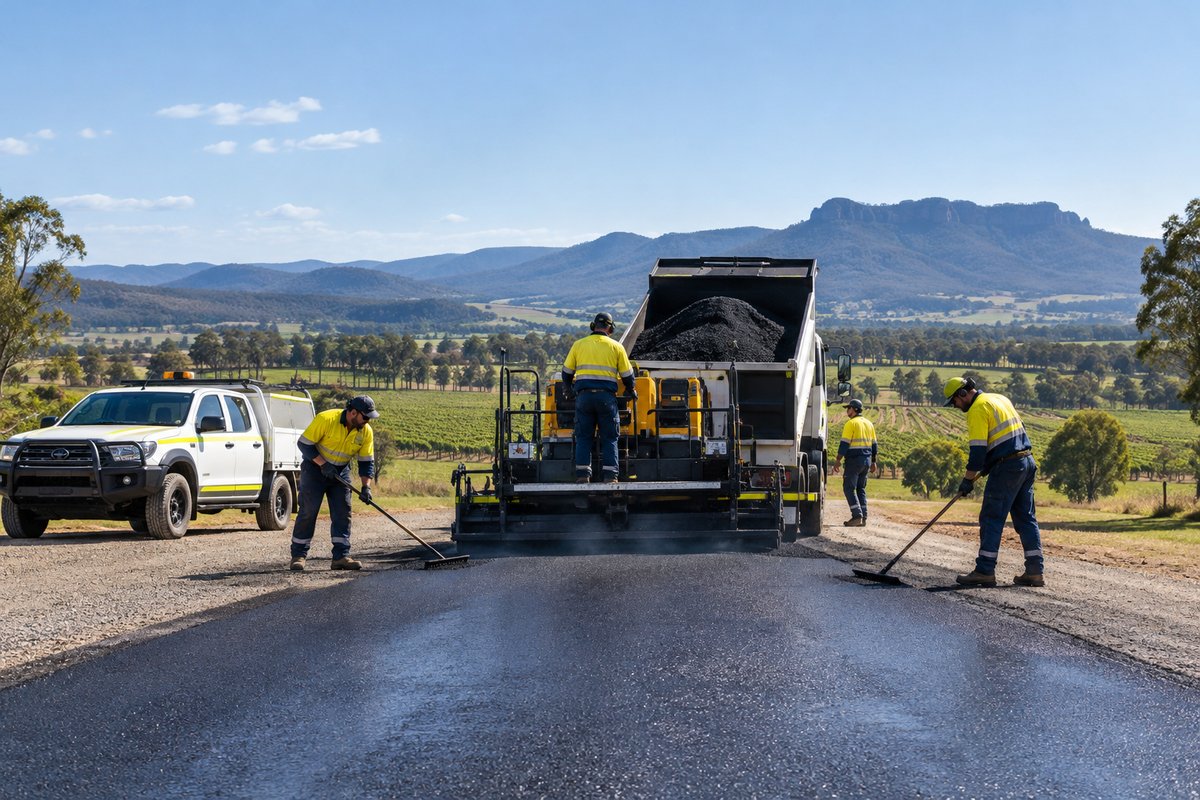
Talk to our professional Asphalt & Bitumen team for your Maitland Vale property
Get a Free Quote
Our team provides professional services for Maitland Vale properties
Spray-seal and two-coat bitumen driveways for homes, farms and long rural access roads across the Hunter Valley — a cost-effective, hard-wearing alternative to hot-mix asphalt.
Learn More →Long driveways and access tracks for acreage, farms, vineyards and lifestyle blocks — base preparation, drainage and a sealed asphalt or bitumen finish.
Learn More →Resurfacing, overlays and patch repairs for cracked, potholed or worn asphalt driveways and paved areas.
Learn More →Asphalt car parks, hardstands and commercial paving for wineries, cellar doors, venues, shops, warehouses and industrial sites.
Learn More →Hunter Valley Asphalt Driveways builds two-coat bitumen spray seal driveways for homes, acreage and farms in Maitland Vale, NSW. We reshape and compact the gravel base, sort out drainage, then spray hot binder and roll in crushed aggregate in two layers. The result is a tough, all-weather surface that stops dust, ruts and washouts.
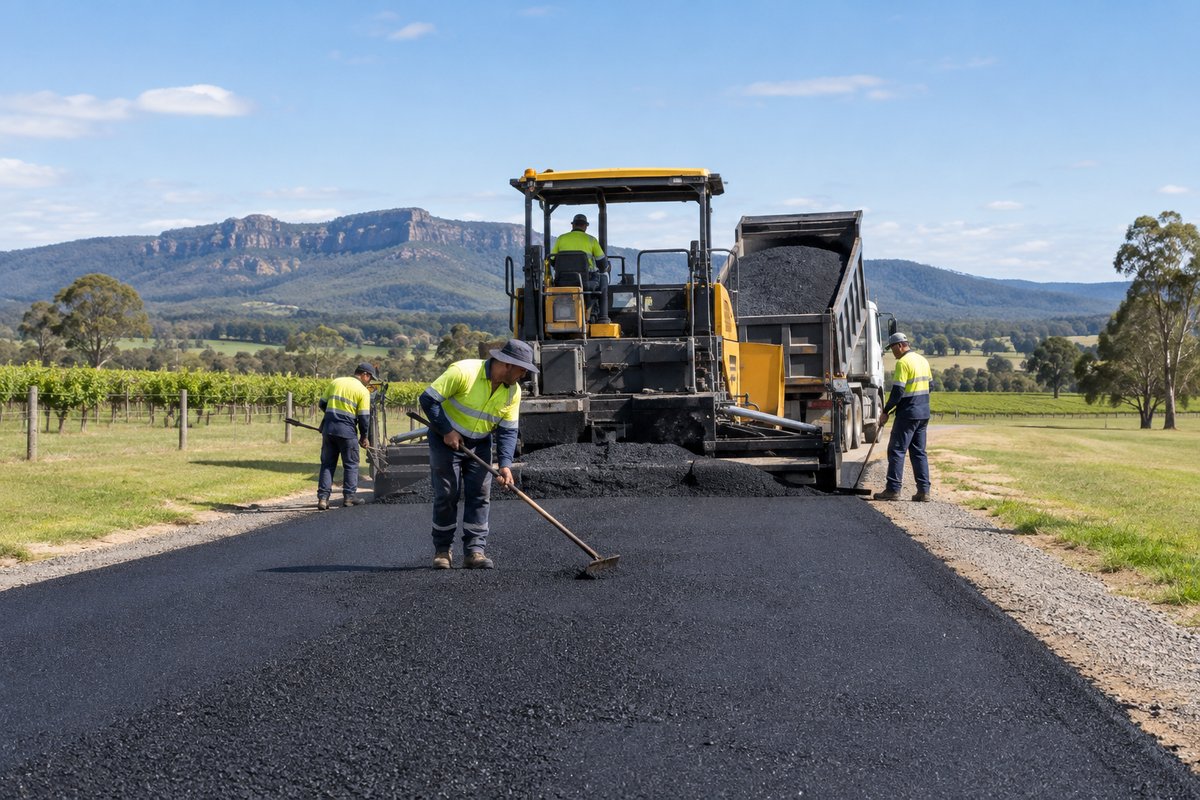
Hunter Valley Asphalt Driveways builds sealed acreage and rural driveways for properties in Maitland Vale, NSW. We start with a compacted road base and proper drainage, then finish with a two-coat spray seal, hot mix asphalt, or a mix of both. The result is a driveway that stops washing out, cuts down dust and handles trucks, floats and farm machinery.
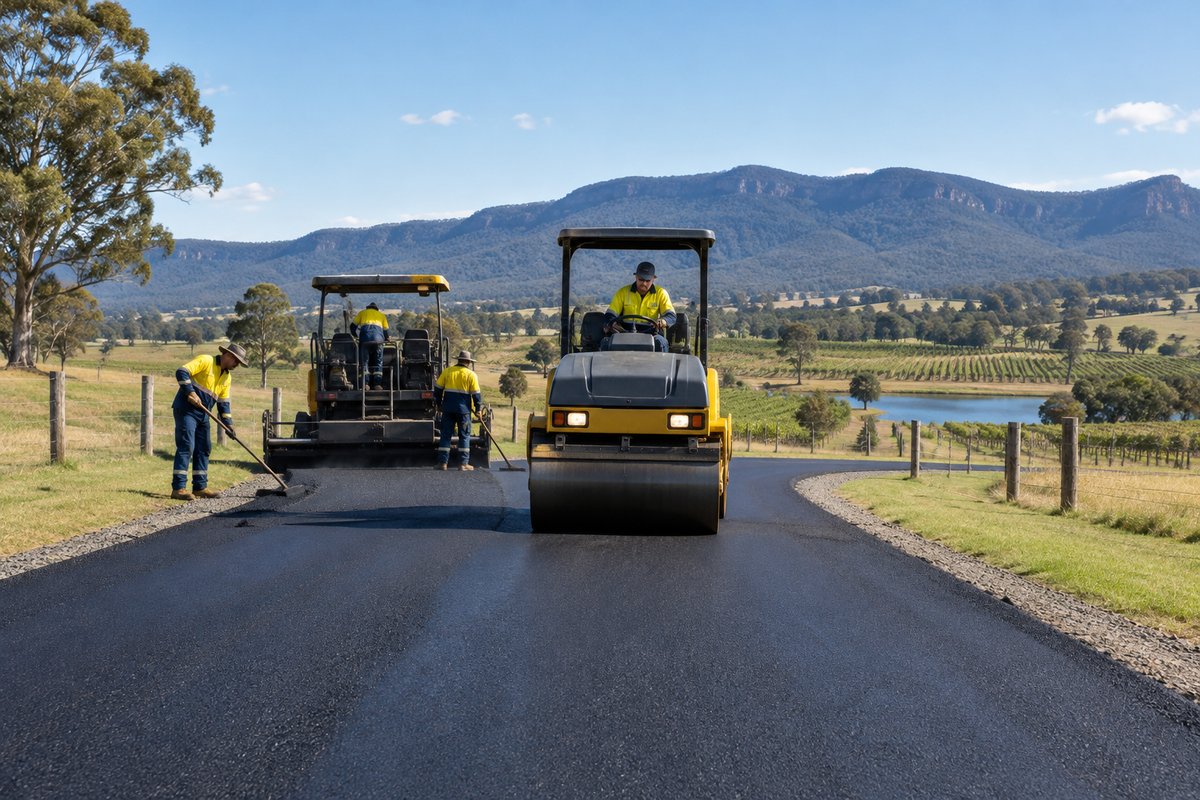
Hunter Valley Asphalt Driveways repairs and resurfaces asphalt driveways, access roads and car parks in Maitland Vale, NSW. We saw-cut and patch potholes, rebuild soft road base, seal cracks and lay hot mix overlays over sound surfaces. Before any asphalt goes down, we check the drainage and base so your repair holds up through dry spells and summer storms.
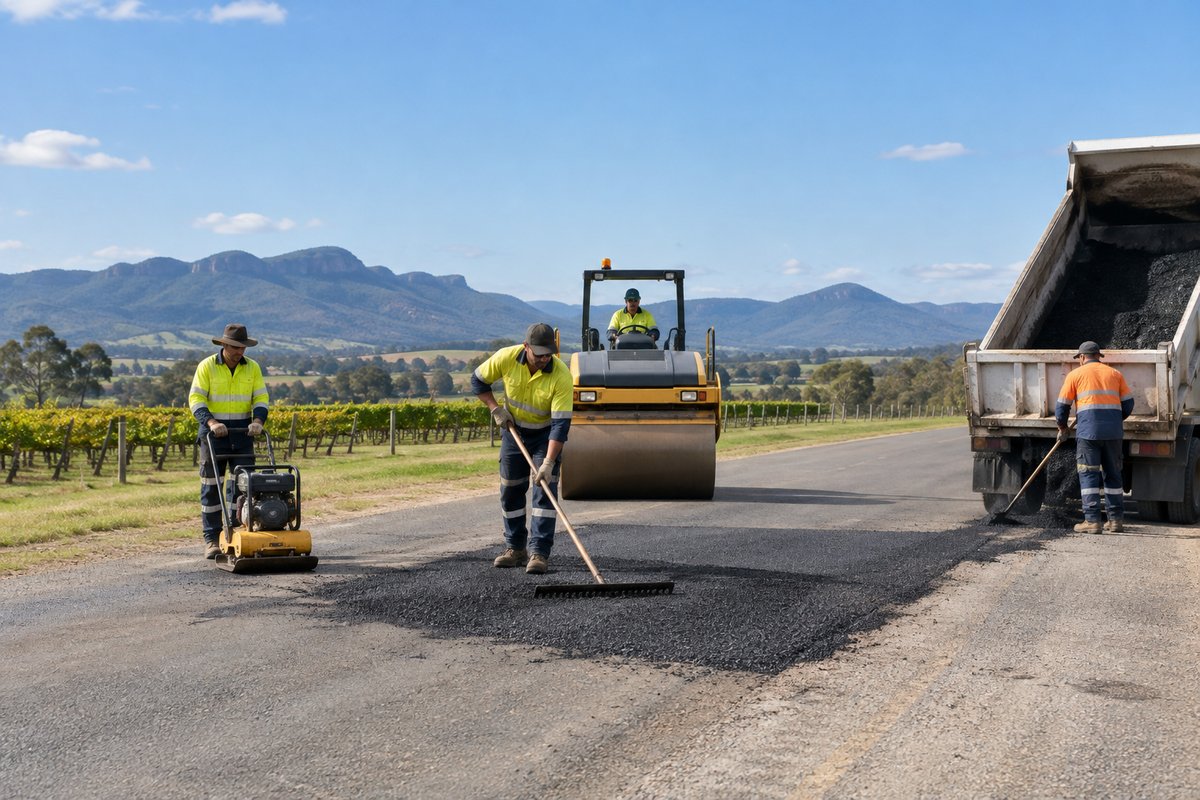
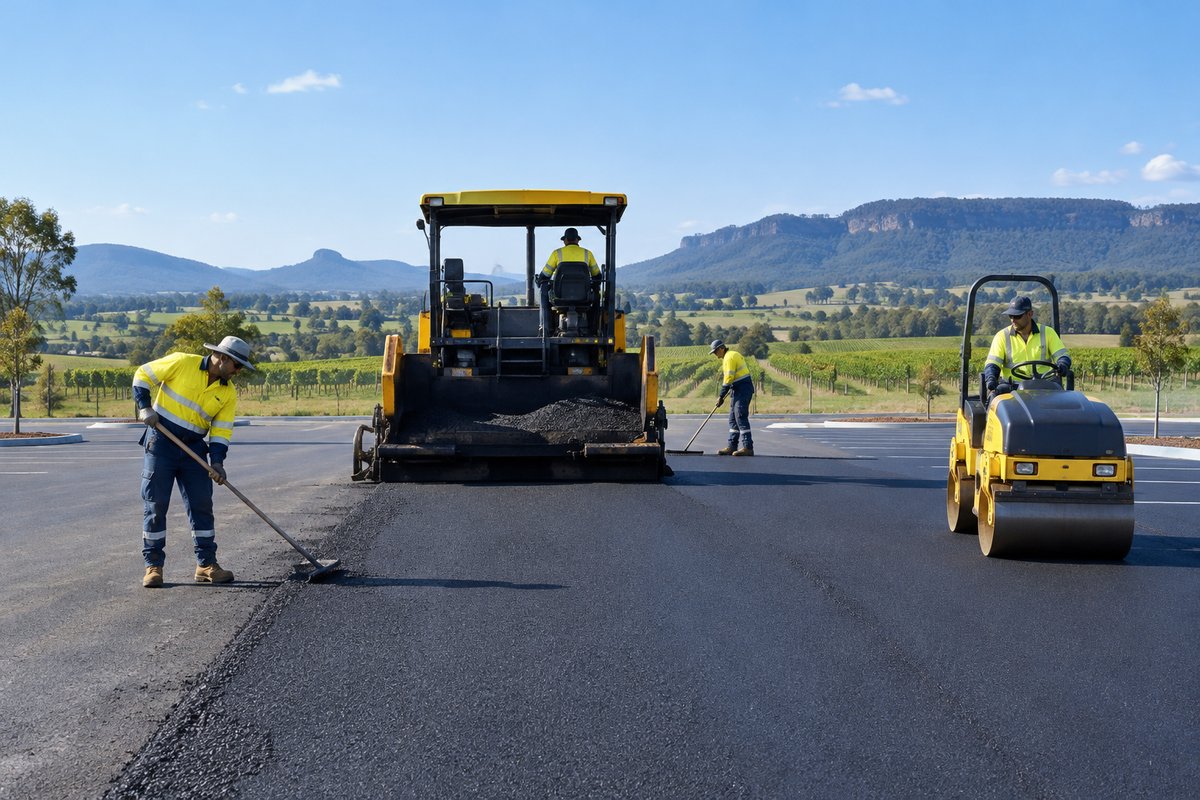
Hunter Valley Asphalt Driveways builds asphalt car parks and commercial pavements for wineries, venues and businesses in Maitland Vale, NSW. We prepare a solid crushed rock base, shape the falls for proper drainage and lay machine-compacted hot mix asphalt that stands up to coaches, trucks and everyday traffic. Request a quote and we will look at your site in Maitland Vale before pricing the job.
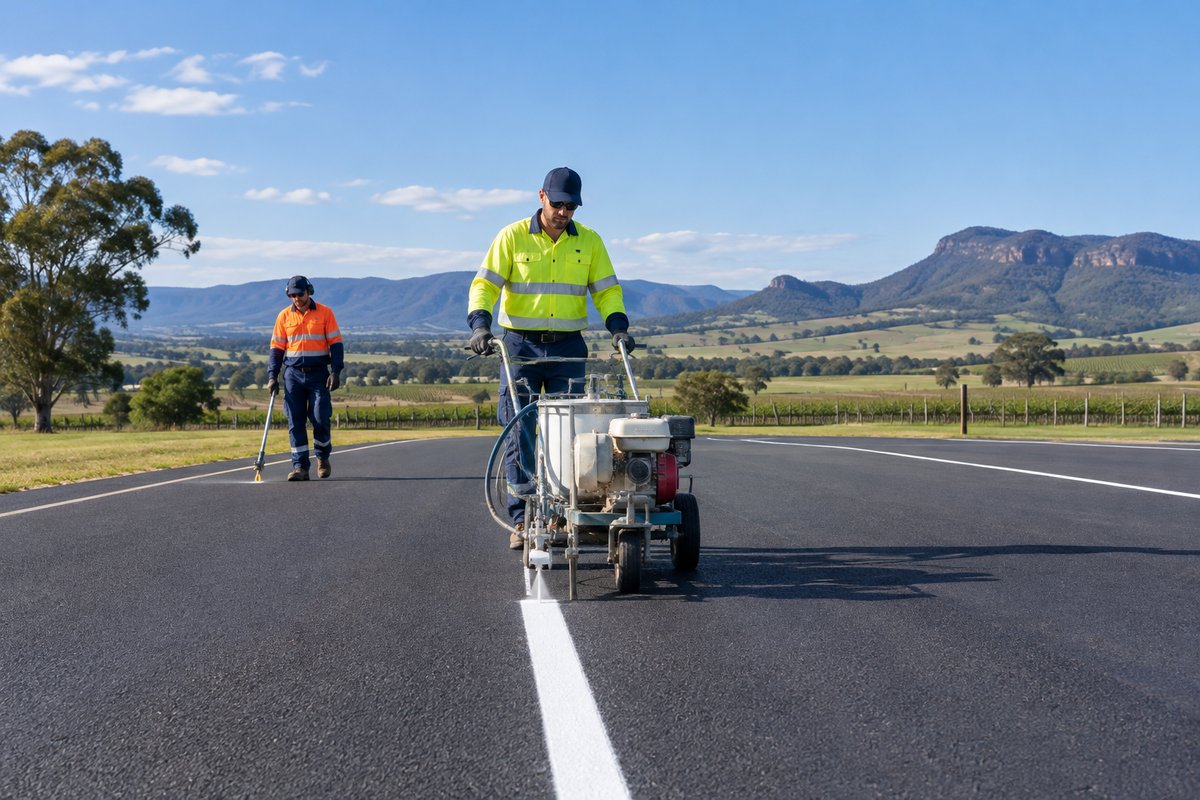
Hunter Valley Asphalt Driveways provides line marking for car parks, driveways and access roads in Maitland Vale, NSW. We set out parking bays, arrows, accessible spaces and walkways on new and existing asphalt, with surface prep suited to local dust and summer heat. Whether you run a winery, venue or local business, we plan a layout that suits how your site is used.
A gravel driveway in Maitland Vale keeps moving on you. Summer storms wash the fines into the table drains, the hot dry spells turn the surface to dust, and every trip to the shed leaves new ruts. Hunter Valley Asphalt Driveways ends that routine with a properly built base of compacted roadbase, topped with a two-coat spray seal or hot mix asphalt to suit how the driveway gets used. We look after homeowners, acreage and farm properties, wineries and local businesses across the area.
Most of the Hunter sits on reactive clay that swells when wet and shrinks as it dries. That movement is behind most of the failed driveways we see, so we put the effort into drainage, subgrade preparation and crossfall before any bitumen goes down. Alongside new driveways, we carry out asphalt resurfacing and repairs, rural access roads, car parks and line marking. If your driveway is potholed, breaking up at the edges or simply sick of the grader, call (02) 4012 0408 for an on-site quote.
The seal is only as good as what sits under it. We remove failed material, lay and compact roadbase in layers with a vibrating roller, and trim the surface to a true level before sealing.
Reactive clay and hot summers are hard on pavements. We shape the surface so water runs off, and we choose spray seal or asphalt based on your soil, traffic and how much sun the driveway cops.
Standing water is what kills a driveway. Where it's needed, we add pipe crossings, cut spoon drains and clean out table drains so storm runoff moves off the pavement instead of soaking into the base.
We look after new bitumen driveways, long rural access roads, pothole and crack repairs, commercial car parks and line marking. You deal with one contractor from the first site visit to the last painted bay.
Step by step on site, here's how we build driveways, rural access roads and car parks in Maitland Vale
We walk the driveway or car park, look at the current pavement, and note where water sits after rain. We mark out falls, drain points and any culvert crossings before quoting the work.
Soft clay and failed gravel are excavated and replaced with quality roadbase. It goes down in layers, watered and compacted with a vibrating roller, then trimmed to shape so the finished surface sheds water.
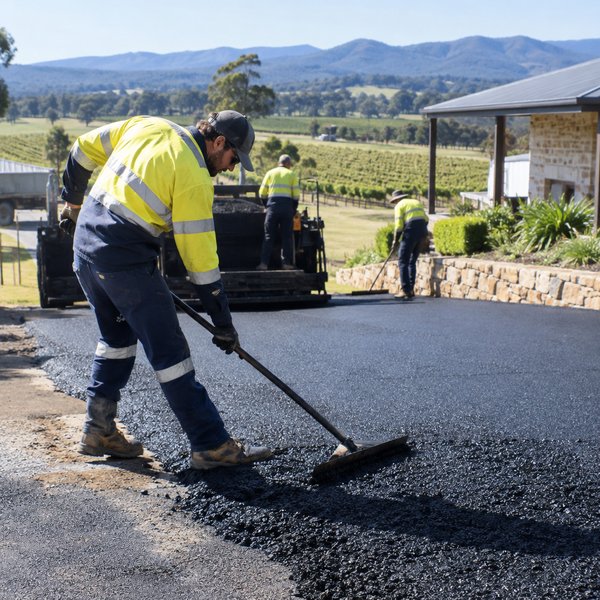
For spray seal, we lay a hot bitumen coat and spread aggregate, then repeat for a second coat and roll it in. For asphalt, we apply a tack coat, lay hot mix with a paver and compact it while it's still at working temperature.
We clean up the site, neaten edges and check drainage runs. Commercial jobs get line marking for bays, arrows and pedestrian zones, and we explain when the surface can take traffic based on the weather on the day.
It depends on length, traffic and budget. A two-coat spray seal is a good fit for long rural and acreage driveways because it covers big areas efficiently and copes with farm vehicles on a sound base. Hot mix asphalt gives a smoother, tighter finish that suits house driveways, turning areas and car parks where vehicles twist their tyres. We'll recommend one after seeing the site.
Sometimes, but only if the gravel is a sound, well-compacted base. Many older driveways in Maitland Vale have lost their fines, and sealing straight over them leads to potholes and cracking. We usually reshape and top up with fresh roadbase, compact it, and box out any weak sections before sealing.
Reactive clay swells when it gets wet and shrinks as it dries out. If water gets under the pavement, that movement works the base loose and the surface cracks. Good drainage, proper crossfall and a solid roadbase layer reduce that risk a great deal, which is why we put so much work into the base.
We do both. For small failures we remove the broken asphalt, fix the base underneath and patch with hot mix. Fine cracks can be sealed to keep water out. If a driveway has failed across a large area, resurfacing or rebuilding is often better value than repeated patching, and we'll tell you straight which makes sense.
Yes. We construct car parks and commercial access roads for wineries, venues, shops and industrial sites, then mark out parking bays, accessible spaces, directional arrows and pedestrian crossings. We can plan the work around your trading hours where possible. Call (02) 4012 0408 to request a quote.
Maitland Vale sits 37km east of the Hunter Valley and carries the postcode 2320. If your driveway, car park or access path needs new surfacing, Hunter Valley Asphalt Driveways can help. We lay hot mix asphalt and apply bitumen seals that hold up to daily vehicles and turning traffic. Every job starts with checking the base, since a soft base will crack the surface first. Request a quote from us for your Maitland Vale property.
Maitland Vale lies 37km east of the Hunter Valley, and Hunter Valley Asphalt Driveways works from that main service area. The postcode for Maitland Vale is 2320. The nearest areas we also serve are Melville and Mindaribba, each about 3.1km away, along with Oakhampton and Aberglasslyn, each about 4km out. Hunter Valley Asphalt Driveways takes asphalt and bitumen work across these neighbouring areas as well, so a job in Maitland Vale gets the same care as one nearby. In Maitland Vale we handle asphalt and bitumen services such as new hot mix asphalt driveways, bitumen spray seals and crack sealing. Before any surface goes down, our crew checks the existing base for soft spots and poor drainage, since those problems cause most early failures. Each layer is compacted with a roller, and the edges are set so the surface keeps its shape under turning vehicles.